
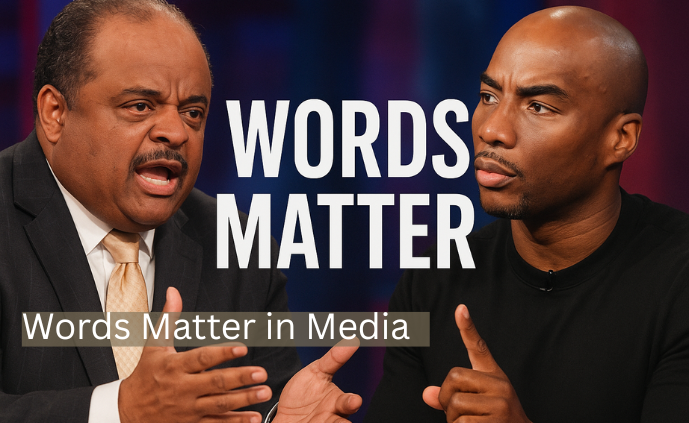
Words matter in media, especially in today’s fractured news ecosystem. Where opinions masquerade as fact, and entertainment often overshadows reporting, that sentiment feels more urgent than ever. That urgency resurfaced in a recent, tense exchange between Roland Martin and Charlamagne Tha God, two influential voices who reach millions across the Black media landscape. Their clash wasn’t just a disagreement — it was a case study in the stakes of truth-telling, platform power, and the obligation to correct misinformation before it spreads.
This moment echoes themes I explored earlier in Music Life Social in a piece about how media coverage shapes the truth. Back then, the focus was on structural failures in journalism. Today, the spotlight falls on the people behind the microphones.
A Flashpoint That Reveals a Larger Problem
The tension began when Charlemagne reacted to Roland’s criticism about comments he made during a discussion on healthcare and the federal shutdown. Roland argued that the comments misinformed listeners. Charlemagne shot back, saying he was offering opinions rooted in genuine concerns over rising healthcare premiums.
But Roland’s point wasn’t about opinion. His message was simple: If your platform influences public perception, you must pursue truth relentlessly.
His video response — now widely circulated — lays the foundation for a broader argument:
Anyone who informs the public, whether journalist or entertainer, must challenge falsehoods in real time. Silence isn’t neutral; it’s harmful.
You can watch Roland’s full commentary here:

And Charlemagne’s full response here:
Journalist or Entertainer? The Line Matters
Roland draws a clear line between journalists and entertainers. It’s a distinction many audiences blur, especially in an era where podcasts, YouTube shows, and radio segments pull higher engagement than traditional newsrooms.
But that blurred line doesn’t absolve responsibility.
Influence is influence.
If you have a mic, a camera, or a platform that people trust, then the words you speak carry real weight. Roland argues — correctly — that public trust requires consistent accountability, particularly when discussing policy, elections, and issues that shape the daily lives of Black communities.
Charlemagne’s characterization of Roland’s criticism as an attack misses the deeper issue:
The role of media figures has changed. The responsibilities have not.
The Power of a Single Phrase
One of Roland’s strongest arguments is that even a small linguistic slip can distort public understanding. This mirrors what I wrote about previously: media frames shape narratives before the facts ever land.
A phrase like “Democrats won’t do anything about healthcare” may feel like opinion, but it can easily be interpreted as fact. And when audiences don’t have full access to policy details, the distinction becomes murky.
That’s why Roland insists on precision.
That’s why he stops his guests mid-sentence when they present half-truths.
That’s why he repeatedly says: “Words matter.”
It’s not pedantry.
It’s protection.
Misinformation vs. Disinformation: Intent Matters, Impact Matters More
Both men discussed whether the issue was misinformation or disinformation. Roland’s argument: misinformation can be unintentional but still deeply harmful. Disinformation is deliberate.
In this case, he wasn’t accusing Charlemagne of malice. He was accusing him of carelessness.
And in a 2025 media environment where false claims ricochet across timelines with gasoline-like speed, carelessness is a privilege we cannot afford.
Elevating Media Literacy as a Community Imperative
Roland closes his video with a call to action rooted in media literacy. He reminds viewers that our community’s access to accurate information is not guaranteed. It must be protected.
When a teenager reaches out and says a piece of reporting changed their understanding of politics, that’s not a small thing. That’s impact.
Journalists, commentators, radio personalities, podcasters, influencers — all of them now shape how information flows. And that means every word carries consequence.
The Real Debate Isn’t Martin vs. Charlamagne
The real debate is about truth vs. noise.
It’s about whether we accept a media culture where flawed information goes unchecked simply because it came from someone charismatic.
It’s about whether community-focused media holds itself to a higher standard than the mainstream outlets that so often distort our issues.
Roland Martin is right when he says words matter.
Charlamagne is right when he says the people are hurting.
But truth — real truth — requires more than passion.
It requires discipline.
It requires correction.
It requires humility.
And it requires a commitment to getting it right even when it’s inconvenient.
Conclusion: A Moment Worth Examining, Not Escalating
The confrontation between Roland and Charlemagne wasn’t just ego. It wasn’t simply friction between two personalities long familiar with each other’s methods.
It was a reminder that Black media is at a crossroads.
Will we allow imprecise narratives to dominate because they feel good in the moment?
Or will we demand clarity, factual accuracy, and accountability from anyone who claims to speak for us, to us, or about us?
If words matter — and they do — then this moment should inspire reflection, not division.
Because the future of our political understanding, our civic engagement, and our cultural progress depends on truth being defended, even when it’s uncomfortable.
