
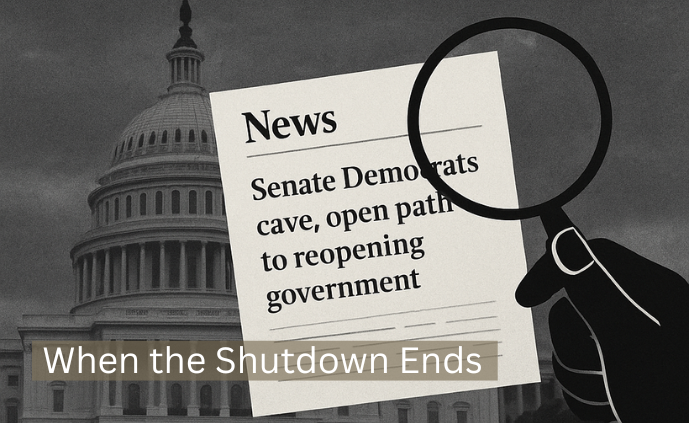
- The phrase media shapes the truth anchors this exploration into the chaotic finish of the 2025 shutdown. Government reopened, yet a deeper story waits beneath the headlines. The end came through strained negotiations, shifting alliances, and a thin promise from Senate Republicans to revisit issues that Democrats had fought for. But the question lingers: What is the truth, and who is responsible for telling it?
ChatGPT sai
ChatGPT sai
ChatGPT said:
You said:When the Shutdown Ends but the Story Doesn’t: How Media Must Track the TrutThe phrase media shapes the truthanchors this exploration into the chaotic finish of the 2025 shutdown. The government reopened, yet a deeper story waits beneath the headlines. The end came through strained negotiations, shifting alliances, and a thin promise from Senate Republicans to revisit issues that Democrats had fought for. But the question lingers:What is the truth, and who is responsible for telling it?
A Shutdown Fueled by a Stalemate
The shutdown erupted after Congress failed to pass a funding bill. It lasted43 days, becoming the longest government closure in American history, according to theAssociated Press. The conflict centered on competing priorities, strained relationships, and a refusal by leadership to budge.
Democrats pushed for an extension ofAffordable Care Act premium tax credits, which support millions of families. Republicans demanded a “clean” funding bill with no additions. Tension climbed until the standoff forced workers home and halted services across the country. The scene felt like a replay of past shutdowns, but this fight carried higher stakes and deeper uncertainty.
When the Senate Blinked
Pressure built as the shutdown dragged on. Eight Senate Democrats joined Republicans to pass a temporary funding bill, reopening the government without securing firm commitments on health-care protections.Fox Newsframed the move as a clear Democratic retreat. Their reporting highlighted the absence of concessions on the issues Democrats had championed.
YetThe Guardiandescribed the negotiations in more layered terms. The outlet traced how the final compromise developed and emphasized the political risks for both parties. The publication’s timeline captured the chaos without awarding victory to either side.
Understanding these differences is essential. Media framing shifts how the public interprets political moves. When one outlet calls a compromise a “cave,” while another presents it as a tactical decision, truth becomes less about facts and more about narrative.
Promises, Power, and Public Memory
Central to the deal was a pledge from Senate Republicans to bring the ACA subsidies up for a vote in December.The Washington Postdetailed how that promise shaped the agreement. But promises made in the heat of a shutdown often fade under calmer skies.
This is where the truth becomes vulnerable. The public rarely sees whether these “future votes” are genuine or symbolic. Without follow-through from journalists, the electorate loses its ability to judge political integrity. Accountability fades. Leaders avoid consequences. And the narrative resets before the public understands what actually happened.
In this case, the only way voters will know whether the Senate acted in good faith is if reporters track the outcome. That task is not optional. It is fundamental to a functioning democracy.
Why Media Must Follow the Aftermath
The shutdown’s end may feel like a conclusion, but it marks the beginning of a new responsibility for the press. Real journalism requires returning to the promises made and asking whether they were honored.
Outlets likeVoxargue that Democrats never held enough leverage to force a lasting victory. That perspective could be true. Yet without verifying the fate of those ACA subsidies, these assessments remain incomplete.
Accountability journalism bridges that gap. It applies pressure, tracks movement, and ensures the electorate sees more than political rhetoric. By investigating outcomes rather than just reporting disputes, media outlets can deliver truth rather than spectacle.
The Role of Responsible Media in an Age of Distrust
Public trust in the media is strained. Many Americans view coverage through lenses shaped by bias, party loyalty, or exhaustion. That tension makes follow-up reporting even more important. When news organizations check whether leaders honor their commitments, they model integrity. They build credibility, and they provide clarity in a space clouded by noise.
The electorate needs information, not performance. They need reporting that goes beyond the moment. Moreover, they need context, transparency, and courage from the press. Tracking what happens after a shutdown is one of the clearest ways for media to earn that trust.
Truth Requires Attention
Shutdowns grab attention. The aftermath rarely does. That imbalance leaves voters without the full picture. The story only becomes truth when the media follows its threads to the end. Without that commitment, public memory fades, and power acts unchecked.
By shining a light on post-shutdown promises, journalists serve the electorate—and democracy itself. Whether Republicans honor their pledge on ACA subsidies is not merely a political question. It is a test of accountability. And it is a story that responsible media must tell.
